Body:
Measurements from ten individuals determined that adults had an average length of 2.3mm and width of 1.6mm. This matches sizes of the genus Voorwindia, which are characteristic of lengths up to 2.6mm (Ponder, 1985)
As with all prosobranchs, Rissoidae are completely torted, have asymmetrical visceral mass,a well developed head and two cephalic tentacles, with a lateral eye at the base of each (Ponder, 1985; Ruppert,et al. 2004). The muscular foot can vary from short to long but is always equipped with an anterior pedal gland (Ponder,1985).The undefined individuals were observed gliding upside down on the water’s surface. This is found in a number of Rissoidae members and is associated with the presence of a posterior pedal gland which allows individuals to string mucus off the water surface (Ponder,1985).
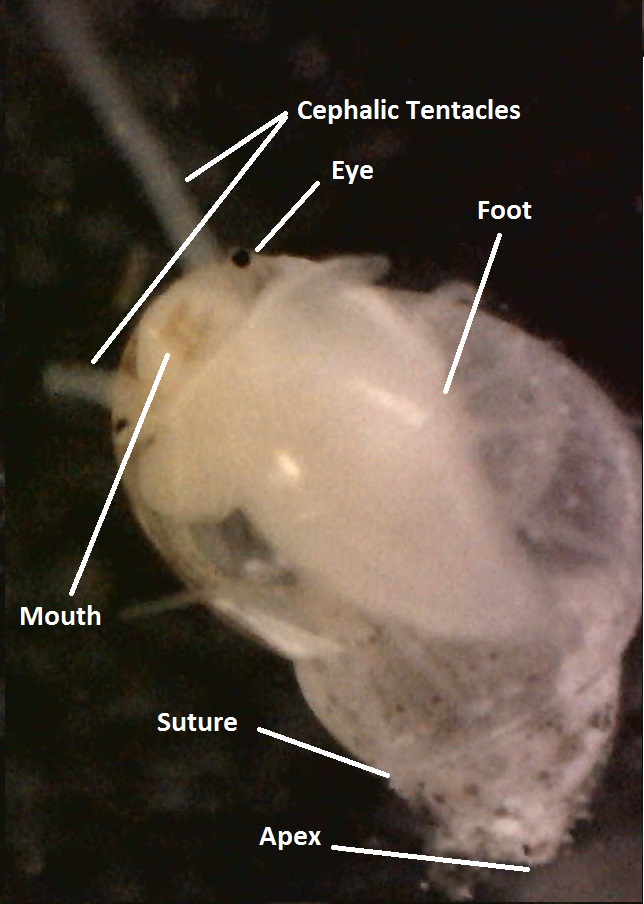
Figure 2: Key Physical features labelled on the Rissoidae individual collected. Operculum:
The operculum, visible in a number of gastropod taxa, is a small ‘lid’ that is retracted over the shell when the individual retracts (Ruppert,et al. 2004). This cap operates as a wall for individuals, protecting them from predators. The operculum of species from the family Rissoidae is rough, oval shaped and may vary in thickness (Ponder, 1985). An operculum was observed for the Rissoid species, fitting the thin, oval characteristics of the genus Voorwindia (Ponder, 1985).
Radula:
The radula is a flexible tongue-like structure,with transverse rows of small chitinious teeth (Ruppert,et al. 2004). This is a characteristic feature of mollusca, only absent in bivalves. Members of the Rissoidae can be identified by their taenioglossate radula. This is a radula which generally has seven teeth in each transverse row, with a layout of 3-1-3 (Figure 3). The central teeth can often be used to separate genera within Rissoidae (Ponder, 1985). The number of paired cusps, sometimes referred to as basal denticles, is the defining character (Ponder, 1985). Most genera only show one pair of cusps; however this does vary in other genera (Ponder, 1985).
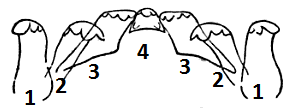
Figure 3: Taenioglossate Radula of Rissoidae family. Image modeled off illustration from Ruppert,
et al. (2004)